Friday, 8 July 2011

Toronto to Vancouver - Log #006# (Blue Lake Provincial Park - Winnipeg, Manitoba)


Kakabeka Falls (Photo).


Kakabeka Falls (Footage)


Blue Lake Provincial Park.


Blue Lake Provincial Park Beach.


Wet to the bone on the way to Winnipeg.


Winnipeg was the gateway for the settlement of The Prairies.


Inuit Inukshuk or stone man (Cairn), used by Inuit Eskimo and other North American Indian tribes to show ways to safety and shelter in the wilderness.


The Forks, a historic site and meeting place in Winnipeg located at the confluence of the Red River and Assiniboine River. 


Strategically located at the junction of the two major rivers this spot was a native stopping place for trade and hunting.

For at least 6000 years, the Forks has been the meeting place for early Aboriginal peoples, and since colonization has also been a meeting place for European fur traders, Métis buffalo hunters and Scottish settlers.


Hudson's Bay Company.


Hudson's Bay Company functioned as the government in parts of North America before European states and later the United States laid claim to those territories. 

It was at one time the largest landowner in the world.

It is the oldest commercial corporation in North America and one of the oldest in the world. A fur trading business for much of its existence, today Hudson's Bay Company owns and operates retail stores throughout Canada. 


Downtown Winnipeg Financial District.


Following World War I, more than 30,000 workers walked off their jobs in May 1919 in what came to be known as the Winnipeg General Strike of 1919.


The Neo-Classical Manitoba Legislature.


The Golden Boy was modelled after the 16th century sculpture Ancient Greek god Hermis messenger god of trade, profit and commerce. 


The sheaf of wheat in his left arm represents the fruits of labour while the torch in his right hand represents a call to youth to join his eternal pursuit of a more prosperous future. 


The statue faces in the direction of Manitoba's north, pointing towards the region to symbolize its importance as a provider of important natural resources and economic opportunity.


With Graham who does Toronto - Vancouver on a his bicycle. (Photo credits to Aussie Kat)


Soundtrack: of course Neil Young (prominent Winnipeger), Sugar Mountain

Thursday, 7 July 2011

Toronto to Vancouver - Log #005# (Wawa - Thunder Bay, Ontario)


Wawa a small township that flourished during the Gold Rush in 1896 when thousands of prospectors gathered to this  rugged corner of northern Ontario to mine gold.


Wawa (the Big Goose) overlooking Trans-Canadian Highway 17.


Arriving Thunder Bay you are greeted by Terry Fox's memorial.


Terry Fox (1958-1981) was a Canadian humanitarian, athlete, and cancer research activist. 

In 1980, with one leg having been amputated, he embarked on a cross-Canada run to raise money and awareness for cancer research. 


The spread of his cancer eventually forced him to end his quest after 143 days and 5,373 kilometres (3,339 mi), and ultimately cost him his life.


With my hosts Eileen and Fernando in Thunder Bay celebrating Canada Day, the anniversary of the July 1, 1867, which united three British colonies into a single country, called Canada.


Soundtrack: Heart of Gold (originally sung by N.Young,cover by J.Cash & J.Frusciante)

Wednesday, 6 July 2011

Toronto to Vancouver - Log #004# (St Joseph Island - Sault Ste Marie - Lake Superior, Ontario)


On my way to Lake Superior.


Espanola was founded in the early 1900s as a company town for the employees of the Spanish River Pulp and Paper company, which opened a pulp and paper mill there.

During the WWW2 the mill site was used as a camp for German prisoners of war.


The term First Nations has come into general use for the indigenous peoples of the Americas located in what is now Canada, except for the Arctic-situated Inuit, and peoples of mixed European-First Nations ancestry called Métis.


In 1955 uranium was discovered near Blind River and in 1983 a uranium refinery was built just west of Blind River. 


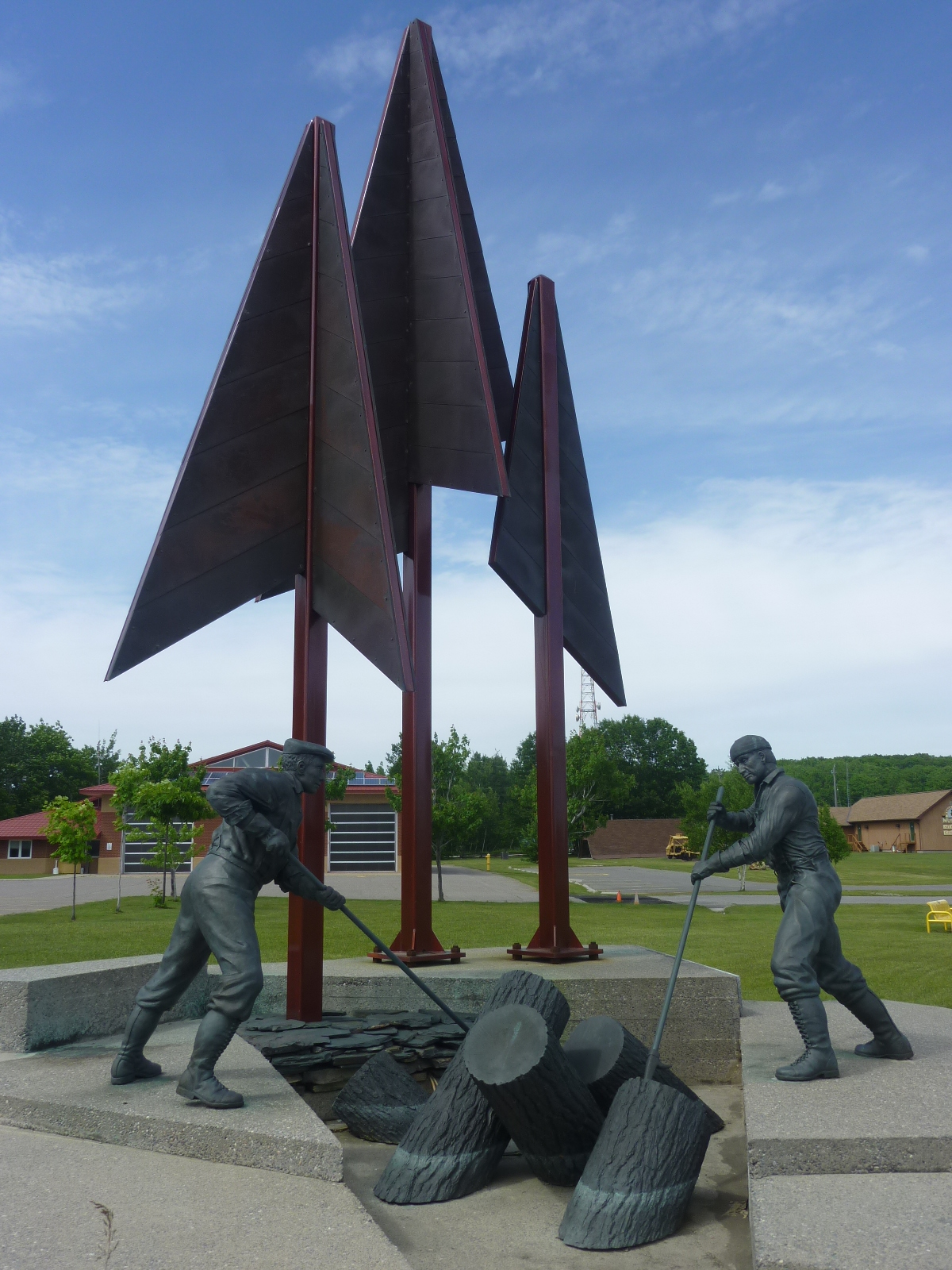
To ensure that logs drifted freely along the river, men called "log drivers" were needed to guide the logs. 

This was an exceedingly dangerous occupation, with the drivers standing on the moving logs and running from one to another. 

Many log drivers lost their lives by falling and being crushed by the logs.

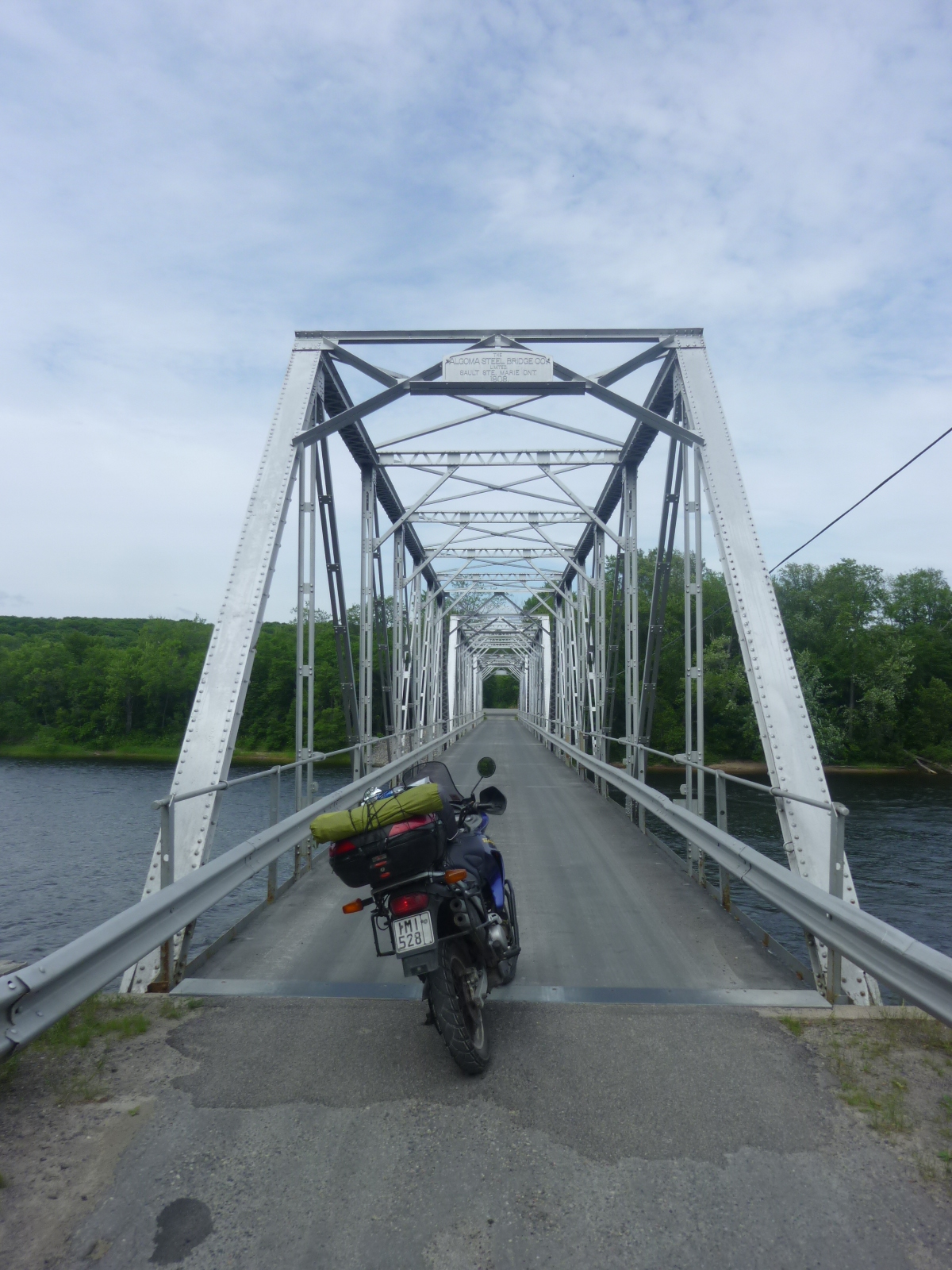
The Iron Bridge.

St Joseph Island is one of the major places producing Marple syrup. 

Below Maple forests.


Arriving Sault Ste Marie.


The bridge to USA.


Sault Ste Marie is a rundown city badly hit by unemployment, booze and drugs.


The city has made a name for itself in steel-making, and Essar Steel Algoma is the largest single employer with 3500 employees at the main plant.


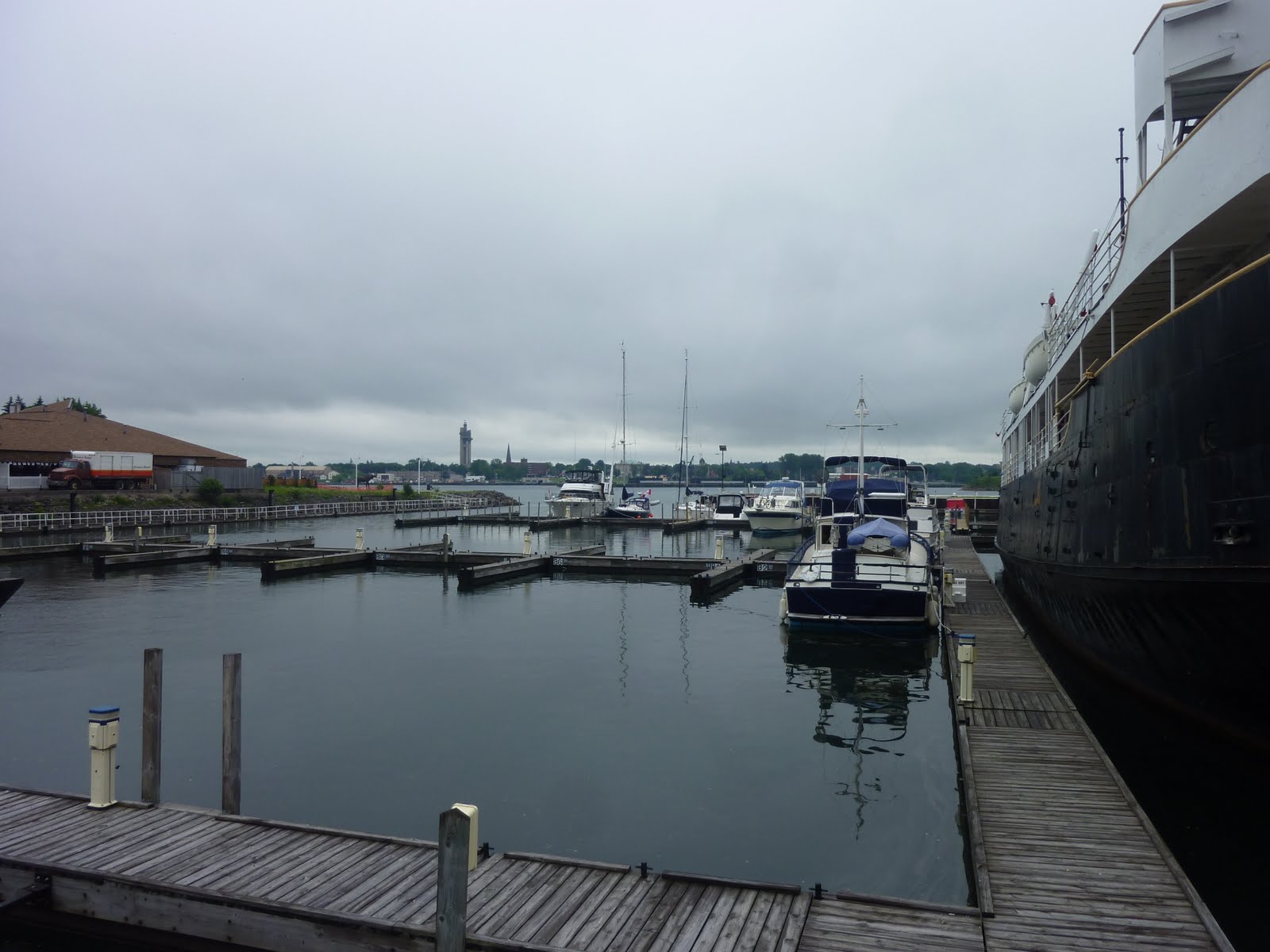
Harbor of Sault St Marie, facing the American Coast.


Towards Lake Superior.


Chippewa Falls is the midpoint of the Trans-Canada Highway. 

The Trans-Canada Highway is a federal-provincial highway system that joins the ten provinces of Canada. It is, along with the Trans-Siberian Highway and Australia's Highway 1, one of the world's longest national highways, with the main route spanning 8,030 km (4,990 mi)


Lake Superior.


Agawa Rock Pictographs on Lake Superior. The pictographs are enduring messages from the past records of ancient dreams, visions and events. The Ojibwe people created these paintings to portray mystical beings animals and humans.


Mishipizheu (the Underwater panther, or Great Lynx) was a powerful creature in the mythological traditions of some Native American tribes.

Mishipizheu, canoe and serpents.


The Agawa Rock is a sacred place for the Ojibwe people.


The cliffs shape the face of an old woman, thus the name Old Woman Beach on Lake Superior.


Soundtrack: The Log Driver's Waltz